You walk into your mom’s kitchen, and she’s standing at the counter, quietly humming while she rinses a mug she’s washed a thousand times before. It’s a small moment, but it’s nothing. That kitchen, that mug, that exact spot by the window, they’re doing something her memory alone can’t always do anymore.
For someone living with memory loss, a familiar environment isn’t just comforting; it’s often the thing holding the day together. If you’re trying to decide whether to keep a parent at home or move them somewhere new, understanding why familiar surroundings matter so much for memory loss can change how you think about that decision. That’s the idea behind how A Partner in Caring approaches memory care.
The Short Answer: Familiar Surroundings Reduce Confusion and Fear
Here’s the direct answer. A familiar environment gives someone with memory loss a set of cues: the layout of a hallway, the smell of a specific soap, the sound a screen door makes, that their brain can still recognize even when it can no longer form new memories easily. Those cues do a lot of quiet work.
They cut down on the disorientation that triggers anxiety, reduce the number of moments when a person has to consciously figure out where they are or what comes next, and let someone lean on habit instead of memory. Most people living with dementia are already at home rather than in a facility.
According to a peer-reviewed analysis published in Innovation in Aging, 70 percent of people living with dementia live in the community, meaning in their own homes rather than institutional care. That’s exactly why the condition of that home environment, and how familiar it stays, matters so much to daily quality of life.
How Memory Works When Other Things Are Changing
Memory loss rarely erases everything at once. Procedural memory, the kind that lets someone find the bathroom in the dark or know which drawer holds the silverware, tends to stick around longer than the ability to form new memories or recall recent conversations. That’s why a person who can’t remember what they ate for breakfast can still walk confidently to their favorite chair.
This is part of why families often notice a parent seems more like themselves at home than they did during a hospital stay or a short visit somewhere new. It isn’t that the memory loss improved; it’s that the environment stopped asking so much of a brain that’s already working hard.
This is the principle our caregivers are trained to protect when they walk into a client’s home. Our caregivers use structured cognitive engagement activities that lean into this: memory games, familiar music, conversation about the past, that work with the environment instead of against it.
What Changes When a Person With Memory Loss Is Moved to a New Place
A new environment asks a lot of a brain that’s already struggling to keep up. Hallways look the same in every direction. Sounds are unfamiliar. The routine of where meals happen, where the bathroom is, where a favorite chair sits by a window, all of it resets at once.
For someone without memory loss, that’s disorienting for a few days. For someone with memory loss, it can trigger real confusion, increased anxiety, and behavior that looks like a decline but is really a reaction to lost bearings. None of this means a person can never be moved safely; sometimes a move is genuinely necessary for the level of care required.
It means the environment itself deserves real weight in that decision, not just logistics like cost or proximity. This is one of the strongest arguments for care that comes to the person rather than moving the person to the care.
Small Changes That Keep a Familiar Home Safe
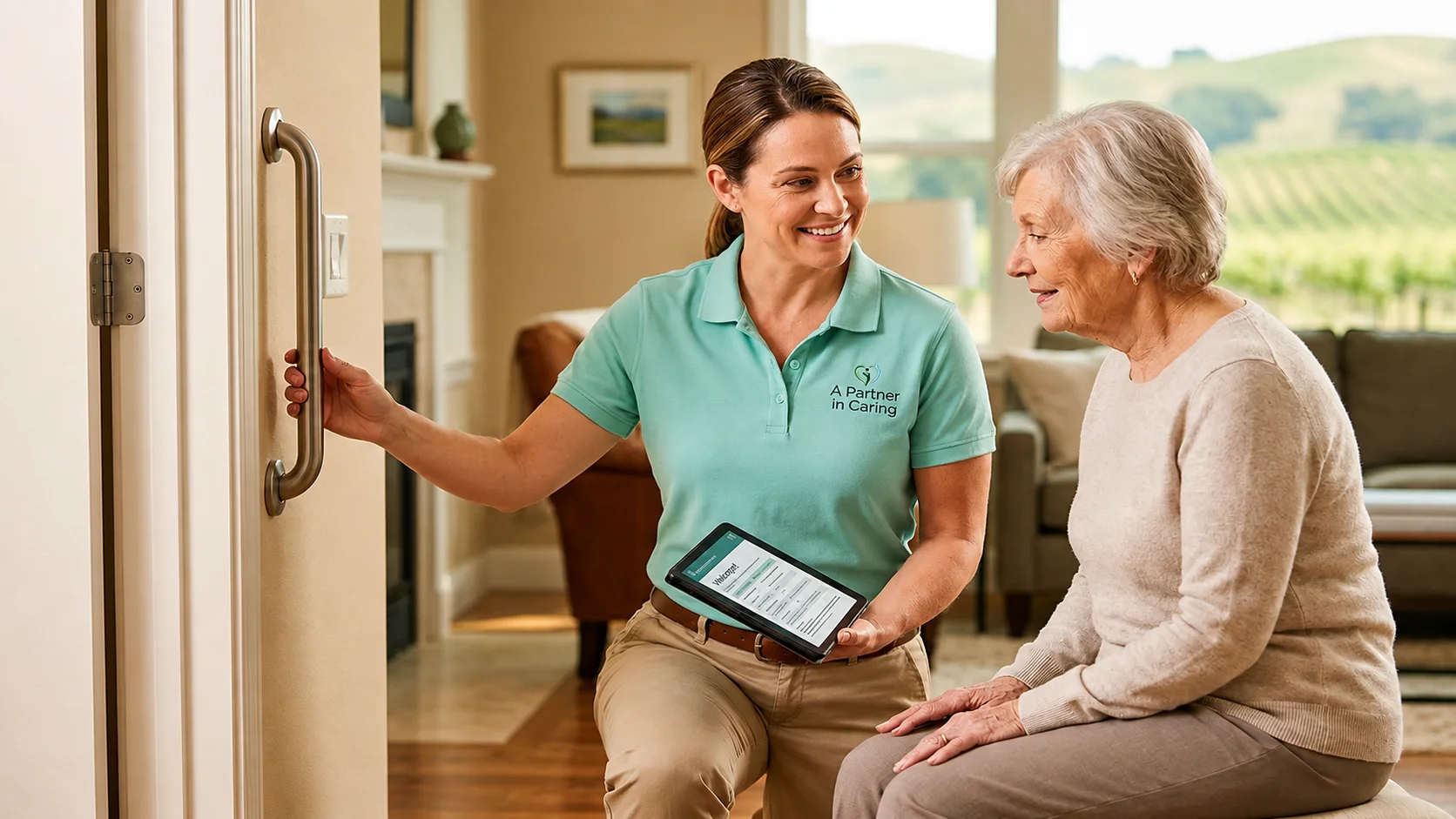
Staying in a familiar home doesn’t mean the home should stay the same, especially if parts of it have become a fall risk or a source of confusion. The goal is to fix what’s dangerous without erasing what’s recognizable. That might mean adding grab bars near a shower a person has used for twenty years rather than remodeling the bathroom entirely, improving hallway lighting instead of rearranging furniture, or labeling a drawer instead of moving its contents somewhere new.
A thoughtful home safety assessment identifies the real risks, loose rugs, poor lighting, cluttered walkways, and addresses them in ways that protect the person without stripping away the surroundings that help them function. Small, incremental changes like these tend to be absorbed far more easily than a full renovation or a sudden move.
How A Partner in Caring Supports Memory Care at Home in Napa Valley
A Partner in Caring has supported Napa Valley families for decades, and our approach to memory care is built around this idea: the home itself is part of the care plan, not just the setting for it. We match caregivers to a client’s personality and needs and prioritize consistency, assigning one primary caregiver whenever possible so your loved one builds trust with a familiar face instead of adjusting to someone new every visit.
Pricing is transparent: $35 an hour, all-inclusive, with no hidden fees, which matters when you’re already managing enough uncertainty. With more than 80 registered caregivers and over 670 families served across Napa, Sonoma, St. Helena, Yountville, and Calistoga, we’ve built our Alzheimer’s and dementia care program specifically around helping people stay in the home they know.
Common Questions About Memory Care at Home
Is it better to keep someone with dementia at home or move them to a facility?
There’s no single right answer; it depends on the level of care needed and the safety of the home, but staying in a familiar environment does reduce confusion and anxiety for many people with memory loss, which is why exploring in-home care with a team like A Partner in Caring is worth doing before assuming a move is necessary.
What if the home isn’t safe anymore?
A home doesn’t have to be perfect; it has to be adjusted. Our home safety assessment can identify specific hazards and recommend targeted fixes that keep the space familiar while removing real risks like fall hazards or unsafe appliances.
Will my loved one see the same caregiver each time?
At A Partner in Caring, we assign one primary caregiver whenever possible, since familiarity with a person matters just as much as familiarity with a place, and we believe both should stay consistent.
Ready to Explore Memory Care at Home?
You don’t have to figure this out alone, and you don’t have to choose between safety and familiarity. A free consultation with our team costs you nothing and gives you a clear picture of what memory care at home could look like for your family. Reach out today to schedule a free consultation.